Board Book Printing Cost: How MOQ, Paper Thickness, and Finishing Affect Your Budget
Board book printing cost is the number one question buyers ask before placing their first order. Unlike paperbacks, board books use rigid cardboard pages, thicker adhesives, and special finishing—every one of these decisions moves your unit price.
Understanding how MOQ, board thickness, and finishing options drive pricing is the fastest way to control your budget. This guide breaks down the real cost structure of custom board book printing with factory-level knowledge you won’t find in generic guides.
Quick Answer: How Much Does Custom Board Book Printing Cost?
Every board book project is priced individually. Your final quote depends on five variables: quantity (MOQ), board thickness, page count, print size, and finishing choices (rounded corners, lamination, spot colors, special effects).
The short answer: board book printing cost is driven by customization — the more precisely your spec matches a standard production line, the more cost-effective it becomes. That is why every Longyin Printing project starts with a free, no-obligation quote tailored to your exact specification.
Click Here To Get a Custom Quote Today!
Key Takeaways
- MOQ drives price per unit: offset printing typically starts at 500 copies, while digital runs allow smaller batches at a higher unit cost.
- Thicker board costs more: the 1.5mm to 4mm double grey board range scales price with durability.
- Finishing adds up: rounded corners are safety-critical; lamination, spot UV, and foiling are premium options.
- Plan the cost structure: pre-press, printing, finishing, binding, and shipping each take a share of your budget.
- Smart specs save money: standard sizes, fewer spot colors, and consolidated orders cut costs without cutting quality.
Table of Contents
- Chapter 1: How Does MOQ Affect Board Book Printing Cost?
- Chapter 2: Paper Thickness and Its Price Impact
- Chapter 3: Finishing Options: What’s Essential, What’s Premium
- Chapter 4: Breaking Down the Full Cost Structure
- Chapter 5: Proven Ways to Save on Custom Board Book Printing
- FAQ: Board Book Printing Cost Questions
Chapter 1: How Does MOQ Affect Board Book Printing Cost?
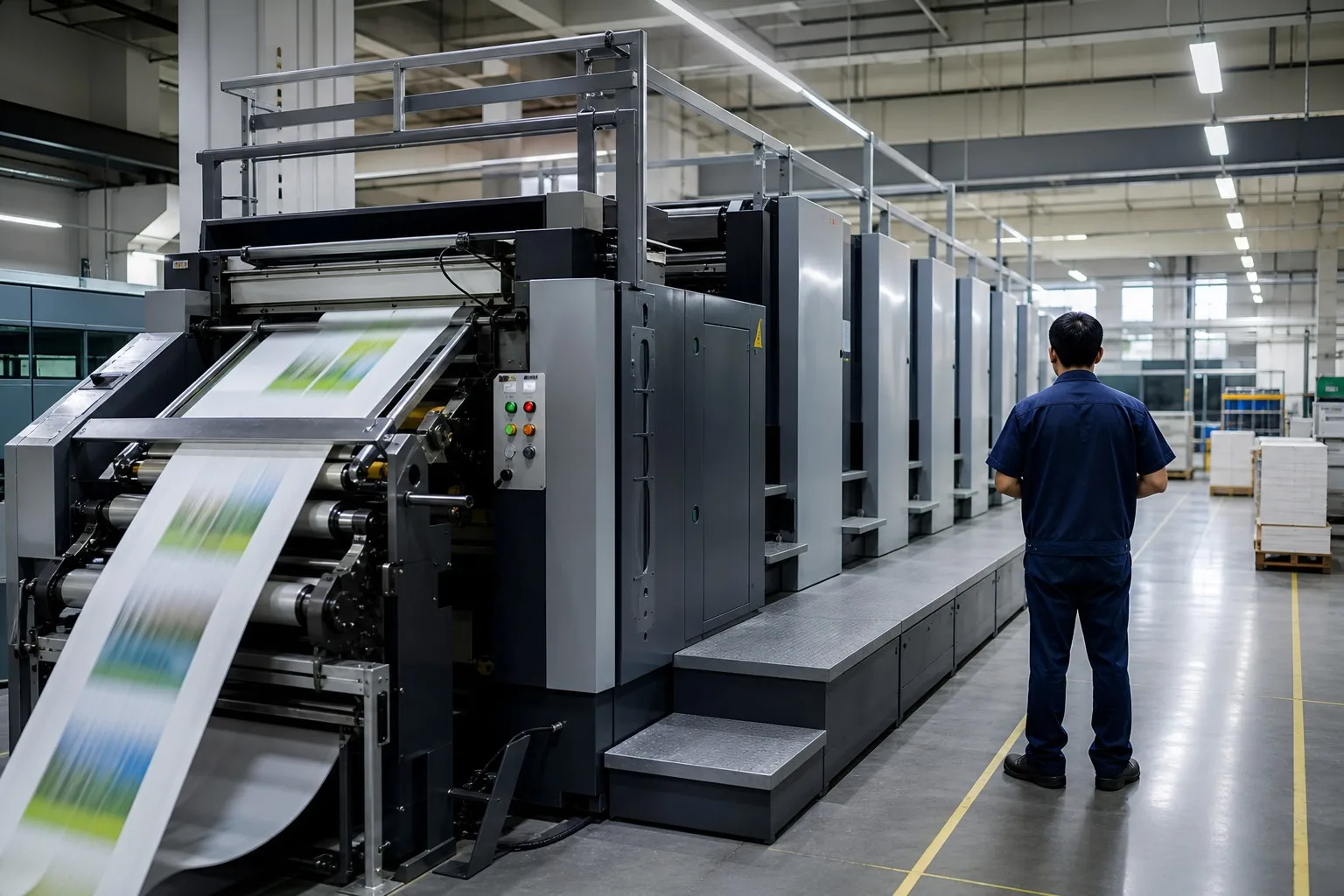
The minimum order quantity (MOQ) is the first cost lever. For board book printing MOQ, offset presses are the standard for volume—typically starting at 500 copies—because the plate setup cost only pays off at scale.
Digital printing removes the plate cost entirely, allowing batches as small as a few dozen copies. The trade-off is a noticeably higher per-unit price for short runs.
As your quantity grows, the unit price follows a downward curve: setup costs spread across more books, paper buying power improves, and press time becomes more efficient. The sweet spot for most publishers sits between 1,000 and 5,000 copies.
Get an Exact Quote for Your Board Book Project!
Chapter 2: Paper Thickness and Its Price Impact
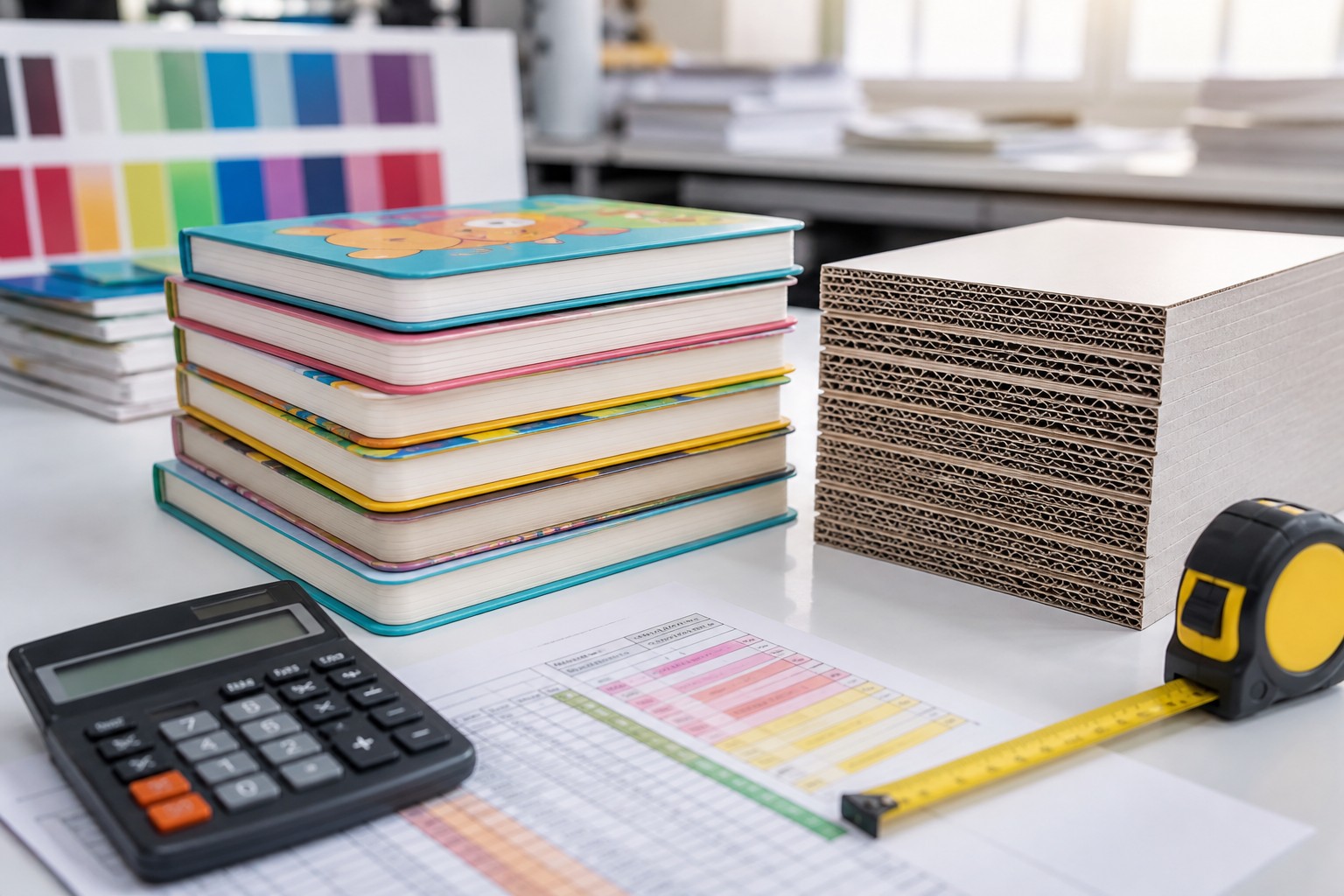
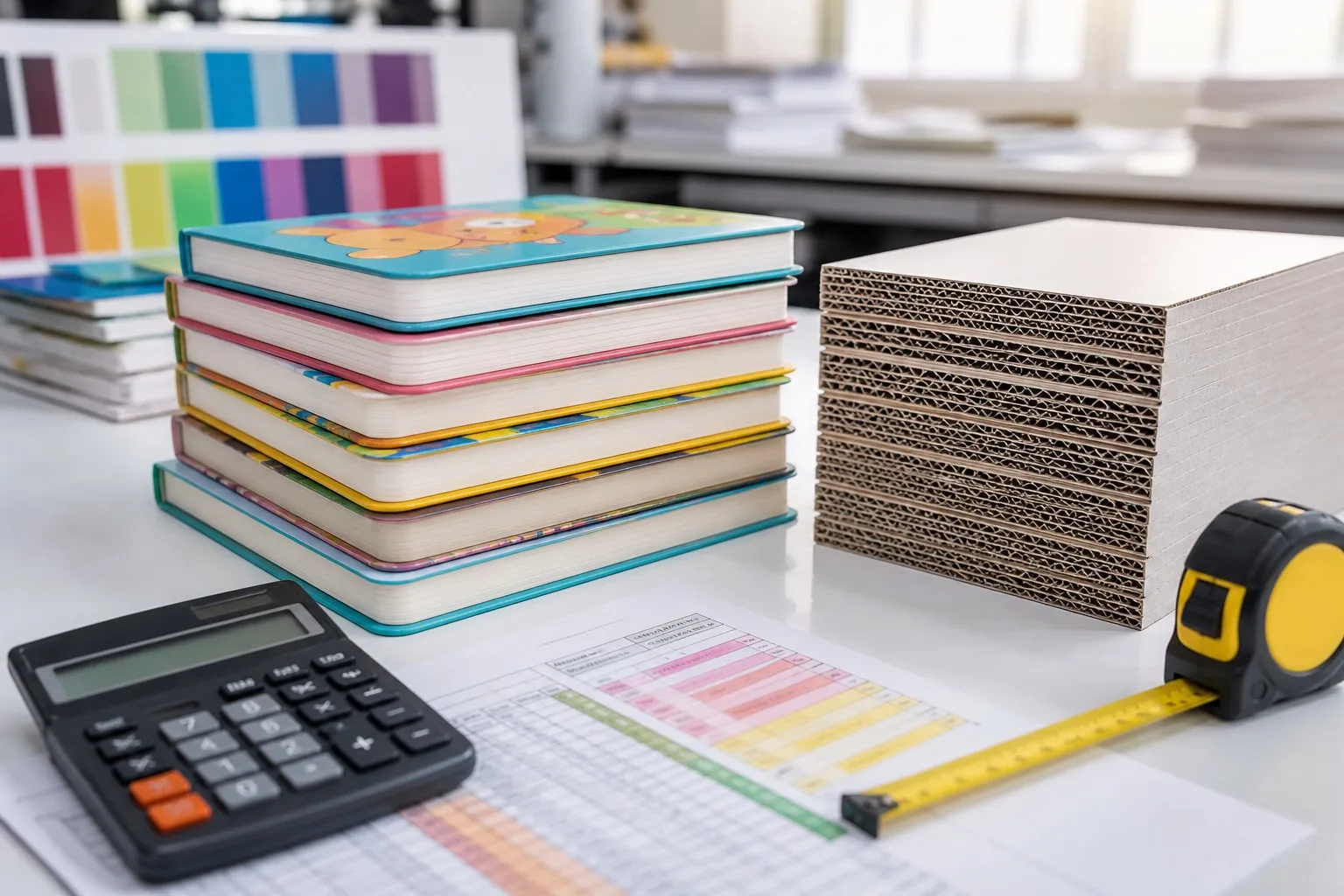
Board thickness is the biggest material cost driver. Chinese board book manufacturing standardizes on double grey board, available in a 1.5mm to 4mm series, plus white card and coated duplex options. For eco-conscious publishers, FSC-certified paper options are available on request.
Thicker board means more raw material, more weight, and higher freight—so the price rises steadily with each step. But thickness also determines durability, which parents and retailers expect from a toddler book.
| Board Thickness | Typical Use | Relative Cost Impact |
|---|---|---|
| 1.5mm | Light picture books, low-page-count titles | Baseline (lowest) |
| 2.0mm | Standard 8-16 page baby books | Low-to-moderate increase |
| 2.5mm | Sturdy storybooks, frequent-handling titles | Moderate increase |
| 3.0mm | Premium board books, floor books | Higher |
| 3.5mm – 4.0mm | Luxury/gift editions, thick interactive books | Highest |
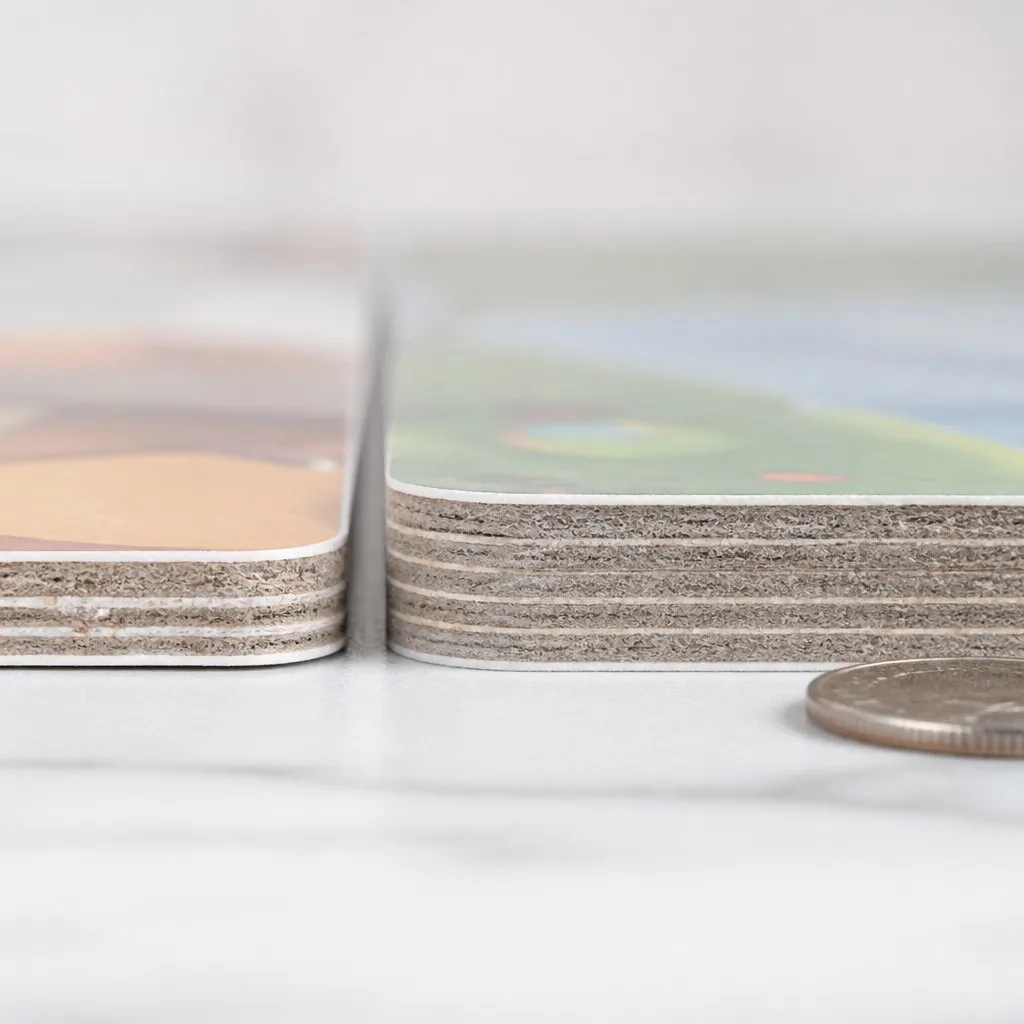
A practical rule: choose the thinnest board that survives your expected usage. Moving from 1.5mm to 2.0mm adds noticeable robustness for a modest cost step, while jumping to 3.5mm+ is a premium decision that roughly scales with the raw material price.
Chapter 3: Finishing Options: What’s Essential, What’s Premium
Finishing choices affect both board book printing price and product safety. Some are non-negotiable for children’s books; others are premium upgrades you can skip.
| Finishing Option | Purpose | Cost Impact | Required for Children’s Books? |
|---|---|---|---|
| Rounded corners | Removes sharp edges, prevents injury | Small | Essential |
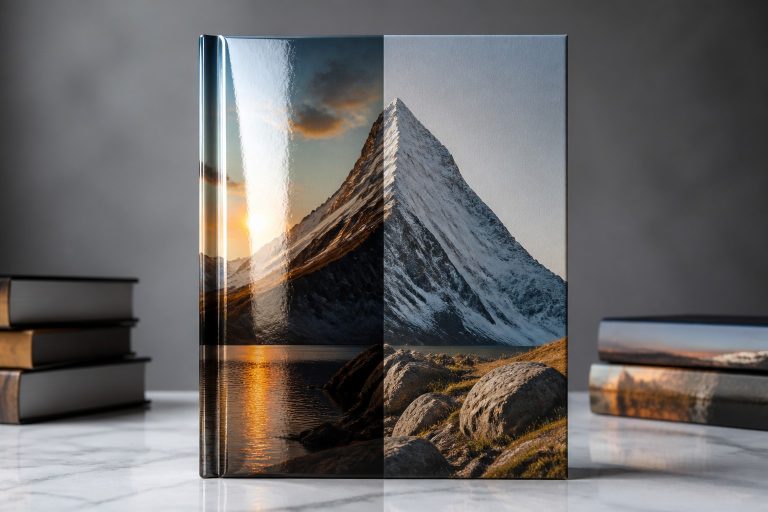
| Lamination (gloss/matte) | Moisture resistance, scratch protection | Moderate | Recommended |
| Water-based/Soy ink | Non-toxic, low VOC | Small | Essential for safety |
| Spot color printing | Brand color accuracy | Moderate | Optional |
| Spot UV / local UV | Tactile highlight effects | Moderate-to-high | Optional |
| Embossing / foiling | Premium cover texture | High | Optional |
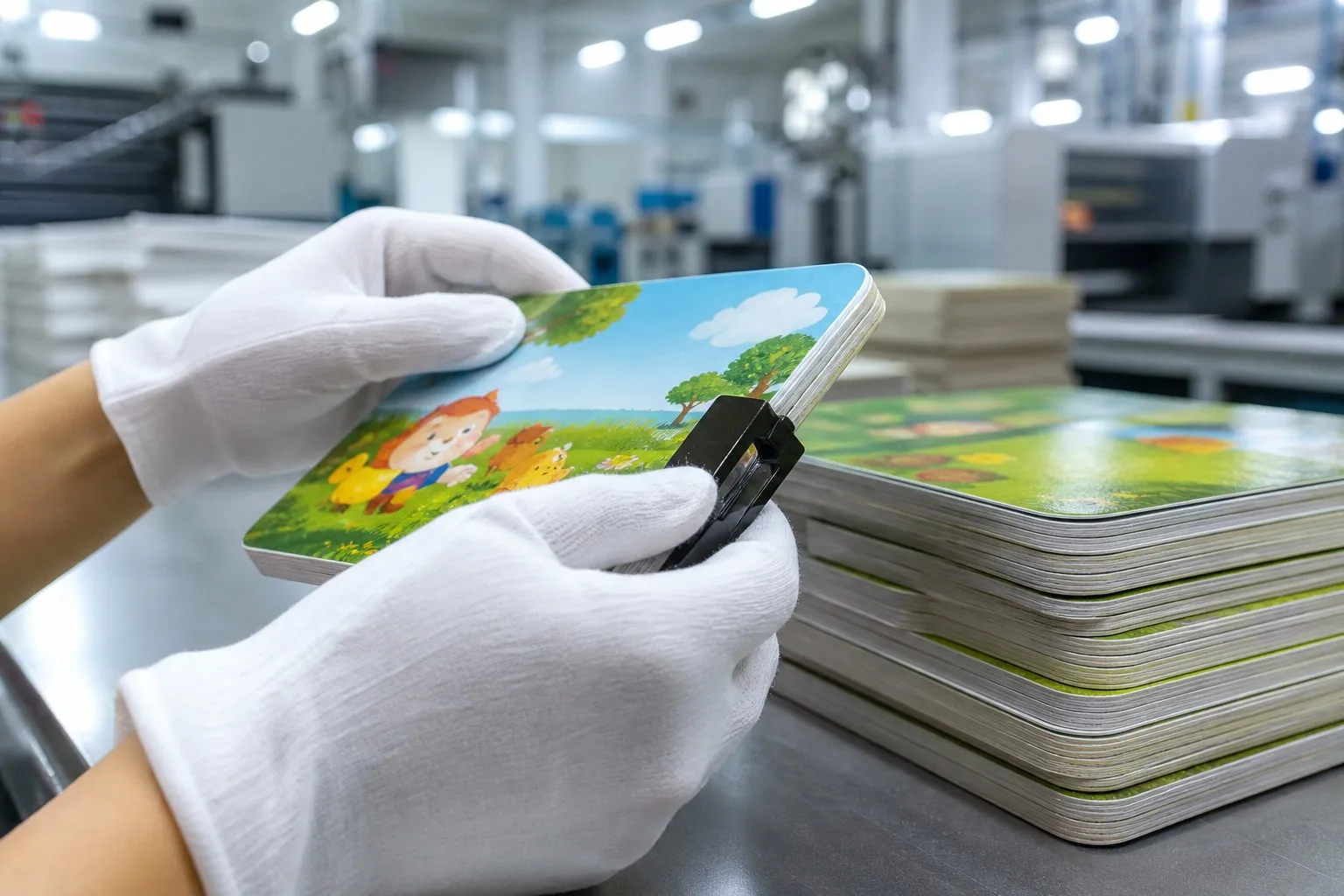
Rounded corners are the classic hidden cost: some low-cost factories skip them to shave the price, but for a toddler product they are a safety requirement, not a decoration. Our rounded corners and non-toxic ink formulations align with the ASTM F963 toy safety standard. Lamination is the best value-for-money upgrade—it protects the board from moisture and peeling, which are the most common wear patterns on children’s board book printing.
Chapter 4: Breaking Down the Full Cost Structure
A board book quote is not one number—it is a stack of five stages, each taking a share of the total:
- Pre-press (file checking, proofing): a small but fixed cost, covering the 8-point file audit and sample proof.
- Impresión (plates, ink, press time): the largest share at volume; dominated by board thickness and page count.
- Finishing (lamination, rounded corners, special effects): moderate share, driven by your option choices.
- Encuadernación (mounting, gluing, assembly): the assembly labor; board book binding is more complex than paperback.
- Packaging & shipping: board books are heavy—freight per unit can rival the print cost for overseas orders.
When comparing quotes, ask suppliers to itemize these five stages. A low headline number often hides a high shipping or finishing line. For a full picture of our end-to-end process, explore our custom board book printing services—every stage is handled in-house under one roof.
Chapter 5: Proven Ways to Save on Custom Board Book Printing
Here are factory-level tactics that reduce board book printing cost without sacrificing quality:
- Use standard sizes: custom dimensions waste board sheet area. A standard format keeps material yield high and waste low.
- Limit spot colors: each spot color adds a printing unit. Two spot colors are the practical maximum before costs climb steeply.
- Pick one lamination type: gloss or matte—offering both on one project doubles setup and material handling.
- Consolidate orders: merge reprints and new titles into one production run to amortize setup costs across more units.
- Ask about sheet sharing: two titles sharing the same board and size can be printed on one sheet, splitting the setup cost.
Every one of these levers is negotiable with the right children’s board book printing services partner. A factory that guides you through them is a factory worth working with.
Get a Detailed Cost Breakdown for Your Board Book!
FAQ: Board Book Printing Cost Questions
Q: What is the typical minimum order for board book printing?
A: Offset board book printing MOQ usually starts at 500 copies. Digital printing allows smaller quantities but at a higher unit price.
Q: Does thicker board always mean much higher cost?
A: Yes, but the relationship is roughly linear with the raw material. Moving 1.5mm to 2.0mm is a modest step; premium thicknesses above 3mm scale noticeably.
Q: Which finishing is worth the money for a children’s board book?
A: Rounded corners (safety) and lamination (durability) are the two best-value choices, aligned with U.S. Consumer Product Safety Commission (CPSC) requirements for children’s products. Spot UV and foiling are premium upgrades, not necessities.
Q: How can I get an accurate board book printing price?
A: Send your page count, size, board thickness, finishing choices, and target quantity to a supplier for an itemized quote across all five cost stages.
Know Your Cost Before You Order
The cheapest quote is not the cheapest project—the one that fits your durability, safety, and quality needs is. With the right specifications, your board book printing cost stays predictable and your product stays competitive.
At Imprenta Longyin, we guide buyers through every cost decision with factory-level transparency, from board selection to final carton.
Send us your specifications and get a clear, itemized quote—no surprises, no hidden lines.
Written by the Longyin Printing team — a full-service printing factory specializing in custom books, packaging, and cards since our founding.
Click Here To Get a Custom Quote Today!
Imprenta Longyin — Board Books Built to Last, Priced to Compete.