Why Do Book Printers Have Minimum Order Quantities? The Real Cost Logic Behind MOQ
Why do book printers have minimum order quantities? Because every print run carries fixed costs – plate making, press make-ready, binding-line setup, proofing, quality-control setup, and paper mill minimums – that do not shrink with the order. A run below the minimum spreads those costs over too few books to be viable. Quality-first factories like Shenzhen Longyin Printing Packing Co., Ltd. set the minimum where fixed costs can be recovered without cutting materials or inspection.
Key Takeaways
- Fixed costs set the floor: A book printing minimum order quantity is the point where plate making, make-ready, binding setup, proofing, and material minimums can be spread across enough copies to be viable.
- Nothing shrinks with a smaller run: Plates, press make-ready, binding-line setup, and quality-control preparation cost the same whether you print five hundred books or five thousand.
- Materials have their own minimums: Paper and board mills sell in mill runs and standard pallet quantities, so a printer cannot buy a fraction of a tonne for a tiny job.
- The curve flattens: Cost per book falls sharply near the minimum, then flattens as paper, ink, board, and freight take over as the dominant costs.
- Plan, do not squeeze: The right response to a minimum is to size the first run around demand and reorder risk – not to strip materials or inspection out of the specification.
Table of Contents
- Why do book printers have minimum order quantities?
- What are the fixed costs behind a book printing MOQ?
- How does quantity change the cost per book?
- What is a book printing minimum order quantity in practice?
- How many books should I print?
- How should buyers plan a first print run around MOQ?
- FAQ: Minimum Order Quantity Questions
Why do book printers have minimum order quantities?
Book printers set minimum order quantities because a print run carries fixed costs that stay the same whether you print five hundred books or five thousand: plate making, press make-ready, binding-line setup, proofing, quality-control setup, and material minimums from paper mills. Below that point, the run cannot cover them.
The minimum is not a sales tactic. It is the quantity at which the fixed part of the process stops dominating the cost of each book. Five groups of fixed cost set the floor:
- Pre-press and plates: file audit, imposition, plate output, and colour proofing are prepared once per title, not per copy.
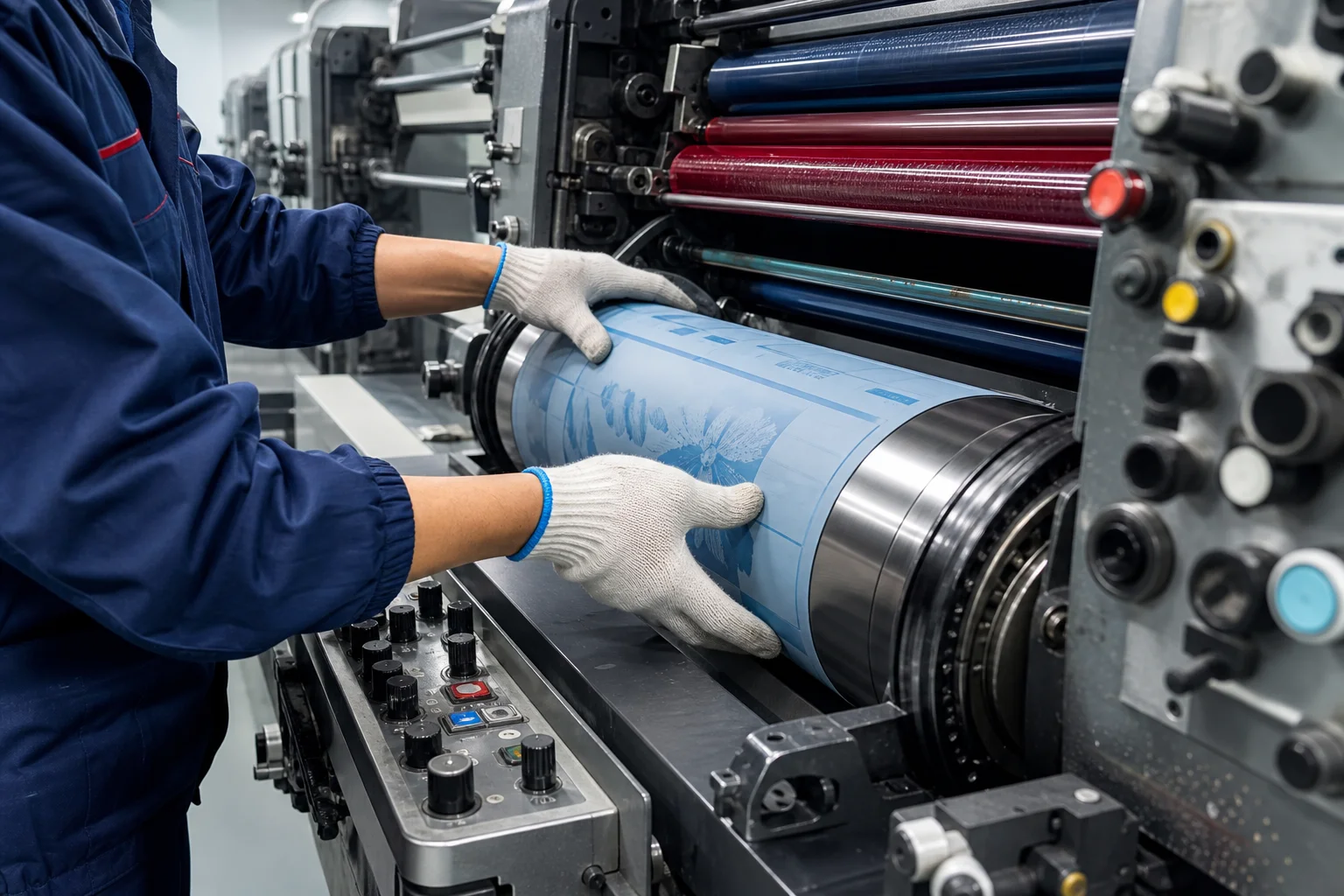
- Press make-ready: ink setting, registration, and colour approval consume press time and waste sheets before the first sellable copy.
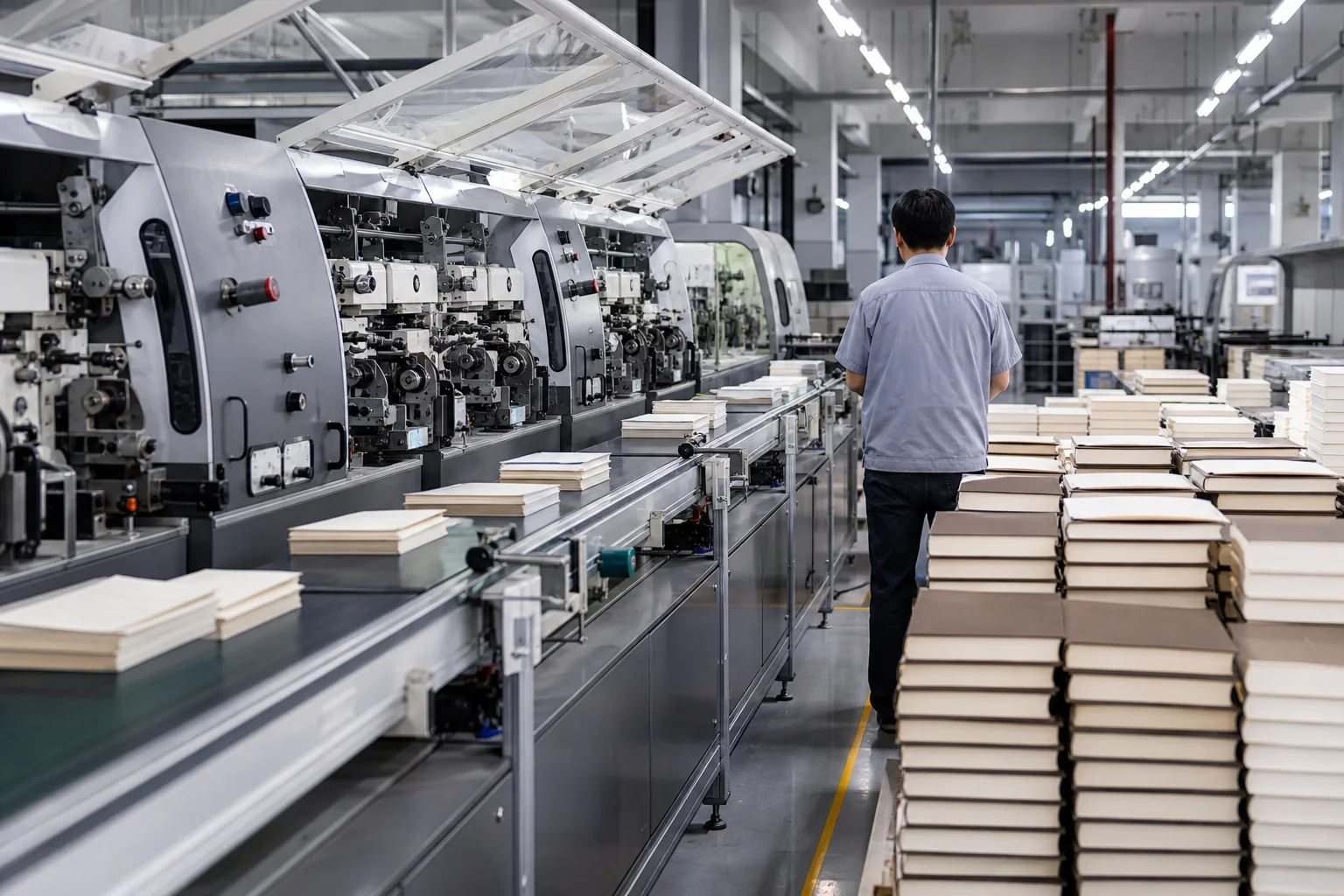
- Binding and finishing setup: folding, sewing, casing-in, foil dies, and die-cut tools are installed and aligned once per run.
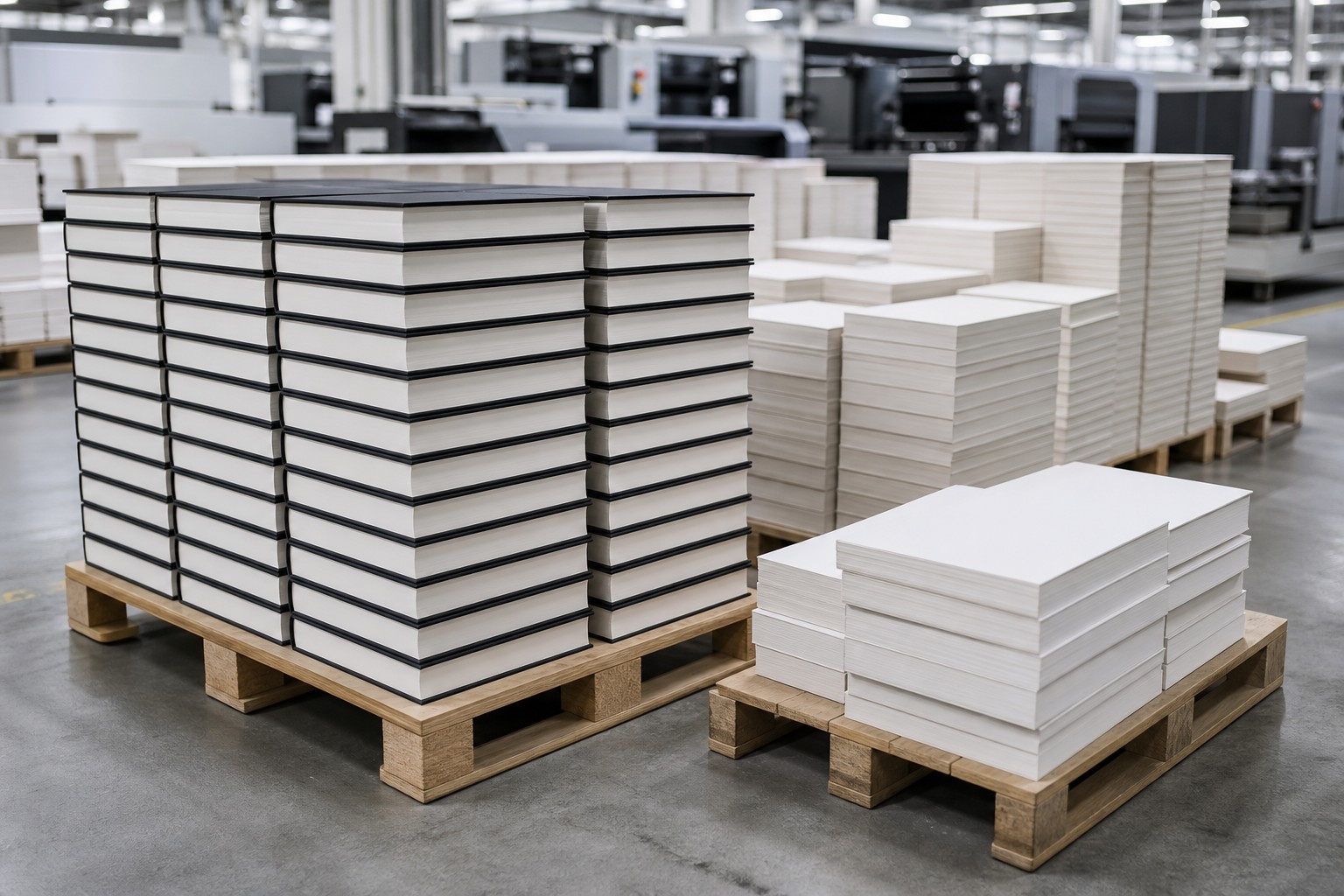
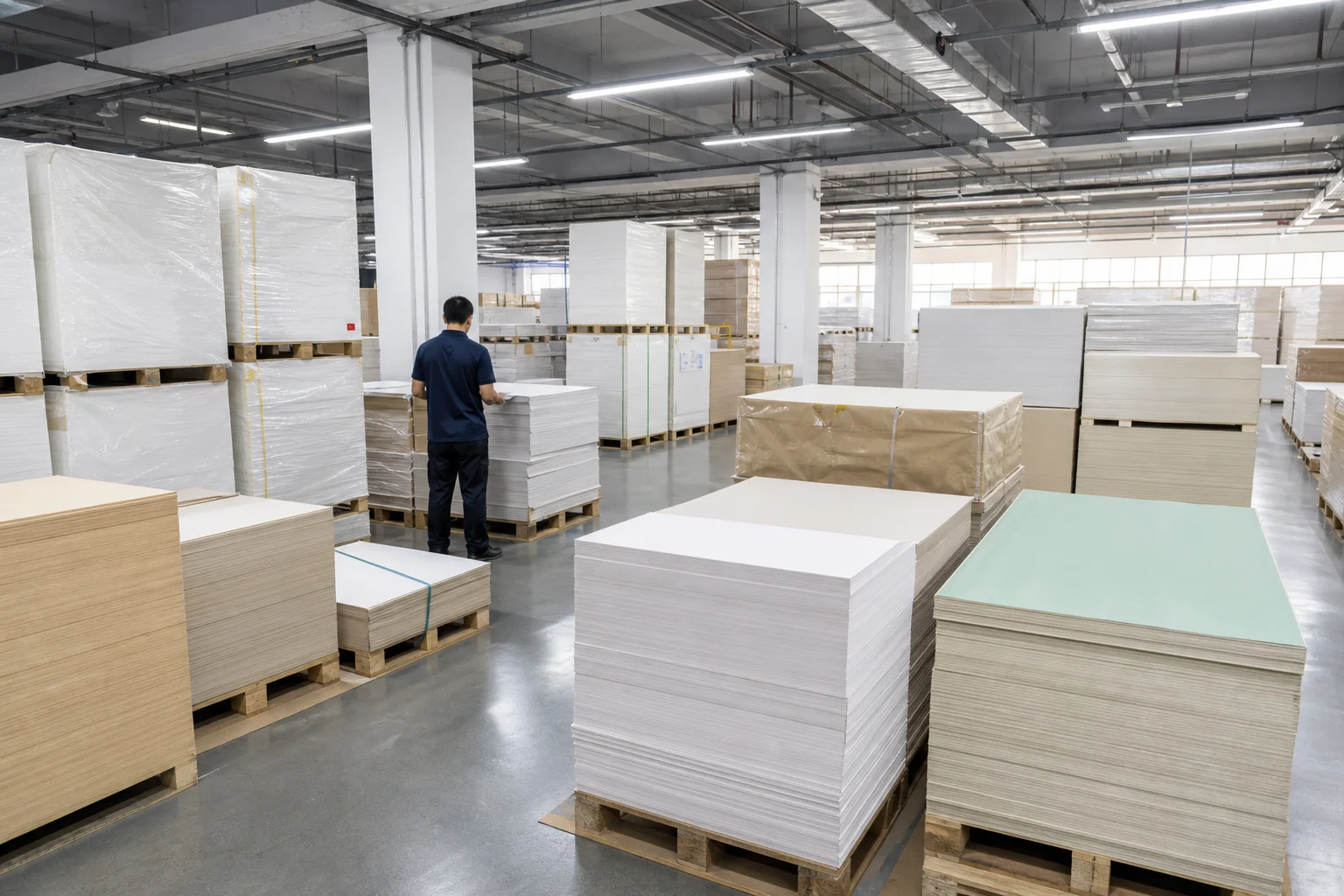
- Material minimums: paper mills and board suppliers sell in mill runs and standard pallet quantities, so small orders cannot be bought proportionally.
- Quality and documentation: inspection plans, sample retention, and export paperwork are set up per order, regardless of volume.
Because these costs attach to the title rather than the copy, a book printing minimum order quantity moves with the specification: a sewn hardcover with foil stamping carries far more fixed setup than a plain perfect-bound title of the same page count.
What are the fixed costs behind a book printing MOQ?
The fixed costs behind a book printing MOQ fall into five groups: pre-press and plate making, press make-ready and colour approval, binding and finishing setup, material minimums from paper and board mills, and quality-control plus documentation setup. None of them scale down with a smaller run, which is exactly why they set the floor.
| Fixed cost group | What it covers | Why it does not shrink with quantity |
|---|---|---|
| Pre-press and plates | File audit, imposition, plate output, digital or wet proofs | Prepared once per title; a 500-copy and a 5,000-copy run need the same plates |
| Press make-ready | Ink setting, registration, colour approval, start-up waste | Press time and waste sheets are consumed before the first good copy |
| Binding and finishing setup | Folding, sewing, casing-in, foil die, embossing die, die-cutting tool | Tools and line settings are installed and aligned once per run |
| Material minimums | Paper, board, endpaper, cloth, and foil purchased in mill or pallet quantities | Mills and merchants sell standard quantities, not fractions of a tonne |
| Quality and documentation | Inspection plan, AQL checks, sample retention, export paperwork | Set up per order and per title, independent of run size |
Two of these lines are often invisible in a quotation. Pre-press and make-ready are usually rolled into a single “printing” figure, and material minimums disappear into the paper price. When a printer itemises them, the reason for the minimum becomes obvious: the first copies of any run carry the entire setup of the title on their shoulders.
That logic also explains why hardcover work behaves differently from softcover. A hardcover book printing run adds case making, board cutting, and casing-in setup on top of the text-block setup, so its fixed block is larger and its minimum sits higher.
Click Here To Get a Custom Quote Today!
How does quantity change the cost per book?
Cost per book falls as quantity rises because the fixed costs are shared across more copies, then flattens once those costs are absorbed and variable costs – paper, ink, board, and freight – dominate. The steepest drop happens close to the minimum; beyond it, each extra copy saves very little.
The shape matters more than any single figure. Three bands describe it:
| Quantity band | What dominates the unit cost | What it means for the buyer |
|---|---|---|
| At the minimum | Fixed setup spread across the smallest viable run | Unit cost is at its highest, but the title is finally economic to produce |
| Just above the minimum | Setup absorbed, materials and press time dominate | Most of the available saving has already been captured |
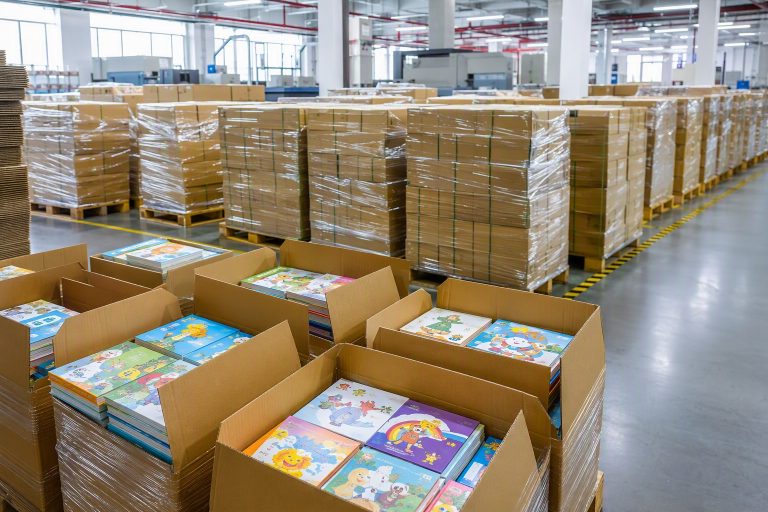
| Well above the minimum | Paper, board, ink, freight, and storage | Additional saving per copy is small, and inventory risk starts to grow |
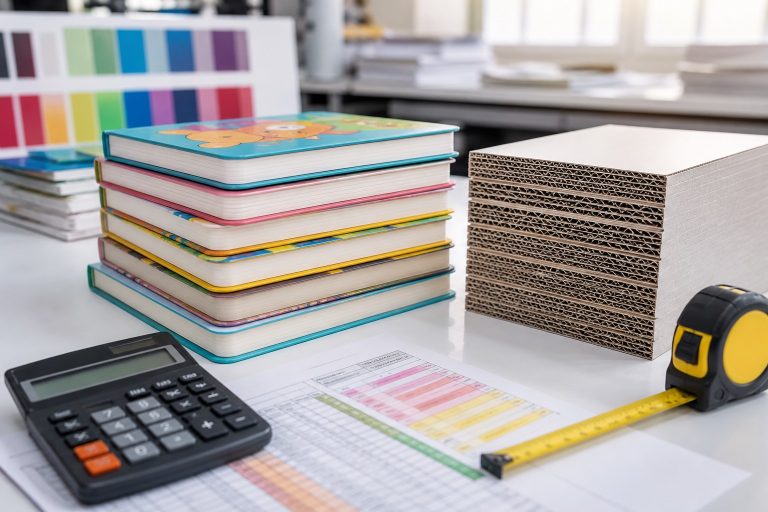
This is why the useful question is not “what is the lowest quantity I can order” but “at what quantity does the unit cost stop falling meaningfully”. Past that point, extra copies are a warehousing decision rather than a printing one. The same curve governs material-heavy children’s formats, which is visible in the way board book printing cost is driven by board thickness and page count rather than by run length alone.
What is a book printing minimum order quantity in practice?
In practice, a book printing minimum order quantity usually runs from a few hundred to a few thousand copies, and it is set by binding type, trim size, page count, paper grade, and finishing. Simple perfect-bound titles can start at the low end; sewn hardcovers with foil, embossing, or special materials sit higher.
| Format or feature | Typical minimum band | Why it sits there |
|---|---|---|
| Perfect-bound softcover | Low hundreds | Text-block setup only, no case making or hand finishing |
| Sewn softcover | Mid hundreds to around a thousand | Thread sewing adds a machine setup and a slower pass |
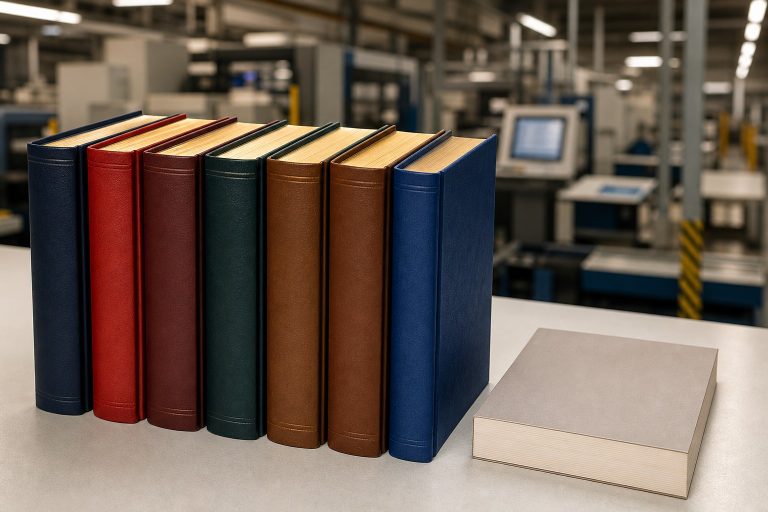
| Case-bound hardcover | Around a thousand and upward | Board cutting, case making, and casing-in each add setup |
| Board book | Generally a thousand and upward | Thick board is bought in mill quantities and glued in multiple passes |
| Foil, embossing, or special finishes | Higher than the base format | Each die is engraved and aligned separately, per title |
These bands are conventions, not rules, because every specification is priced on its own setup. A title with a standard trim, a common paper grade, and no special finishing can be produced economically at a lower quantity than an edition with a custom size, a special board, and three finishing passes.
How many books should I print?
Print the quantity you can realistically sell or store within a sensible window, then round up to the printer’s minimum. A first run is sized by three things: demand you can forecast with confidence, the space and cash you are willing to tie up, and the risk that a reprint will be needed before the next edition.
Work through it in this order:
- Estimate realistic demand: pre-orders, distributor interest, and backlist performance matter more than optimism.
- Add a reorder buffer: a modest overrun is cheaper than a second setup, but it must fit your storage.
- Check the storage cost: warehouse space, insurance, and humidity protection are part of the decision.
- Confirm the title will not change: if the text or cover is still moving, print closer to the minimum.
- Plan the reprint trigger: decide in advance how little stock should remain before you reorder.
A first run that matches demand beats a first run that chases a lower unit cost, because unsold copies and rushed reprints both cost more than the printing itself. The sourcing errors that follow a badly sized first run are catalogued in our article on 7 costly mistakes to avoid when sourcing custom book printing in China.
How should buyers plan a first print run around MOQ?
Plan a first print run around MOQ by fixing the specification first, asking for a tiered quote at several quantities, and comparing the unit-cost curve instead of a single number. Then choose the smallest quantity that keeps the unit cost workable and leaves room for a reorder.
- Freeze the specification: trim size, page count, paper and board grade, binding, finishing, and packaging on one sheet.
- Ask for tiered quantities: request the same specification priced at several run lengths so the curve is visible.
- Separate fixed from variable: ask which lines are one-off setup and which scale with copies.
- Match the format to the quantity: if the run must stay small, simplify binding and finishing rather than materials.
- Confirm the schedule: setup time, proofing rounds, and binding capacity all affect when the run can start.
- Keep inspection in the specification: quality control is the last line that should ever be removed to reach a quantity.
Buyers who plan this way usually find that the minimum is not an obstacle but a boundary: below it the title is uneconomic, above it the savings flatten. Our custom book printing guide walks through the same sequence from specification to delivery, including how proofing and inspection are scheduled.
Click Here To Get a Custom Quote Today!
FAQ: Minimum Order Quantity Questions
Q1: Why can’t I print just a few hundred hardcover books?
A: You can order a few hundred, but the fixed setup – plates, make-ready, case making, and casing-in – is spread across very few copies, so the unit cost stays high. The minimum is simply the point where the run becomes economic for both sides.
Q2: Does a higher quantity always lower the unit cost?
A: No. Unit cost falls sharply near the minimum, then flattens once setup is absorbed. Beyond that point paper, board, ink, and freight dominate, and extra copies mainly add storage and inventory risk rather than saving.
Q3: What is the book printing MOQ for hardcover titles?
A: Hardcover work usually starts higher than softcover because case making, board cutting, and casing-in each add setup. As a convention, hardcover runs commonly sit around a thousand copies and upward, depending on trim size, board, and finishing.
Q4: Can the minimum order quantity for book printing change?
A: Yes – it follows the specification, not the sales conversation. Standard trim sizes, common paper grades, and simple binding lower the fixed setup; custom sizes, special boards, foils, and embossing raise it. Simplifying the process is what moves the number.
Q5: How many books should I print for a first run?
A: Size the first run to demand you can forecast with confidence, add a modest reorder buffer that fits your storage, and round up to the printer’s minimum. A reprint costs less than unsold stock and rushed logistics.
Q6: Do print-on-demand services avoid minimum order quantities?
A: Digital print-on-demand has no minimum, but its unit cost is higher and its format range is narrower – thick board books, sewn hardcovers, and special finishing are usually outside its capability. It suits short lists and proof copies rather than a retail edition.
The Minimum Is a Cost Boundary, Not a Sales Barrier
A minimum order quantity is the visible edge of an invisible structure: plates, make-ready, binding setup, material minimums, and inspection all attach to the title before a single copy is sellable. Read that structure and the number stops looking arbitrary. It becomes the point where a run can be produced without weakening the specification.
At Longyin Printing, we quote from the same fixed-cost logic, keep material grades and inspection inside every specification, and assign one specialist to each order from file audit to delivery.
Click Here To Get a Custom Quote Today!
Written by the Longyin Printing team – book printing specialists for publishers worldwide.