Saddle Stitch vs Perfect Binding: Matching the Binding to Your Page Count
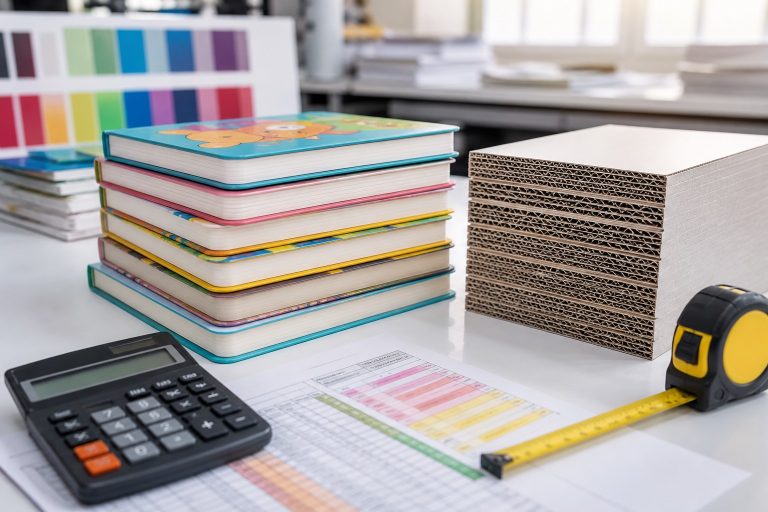
Saddle stitch vs perfect binding is settled by page count first: saddle stitch carries thin pieces from about 8 to roughly 64 pages, while perfect binding needs enough bulk to form a spine and usually starts near 64 pages, running to about 400. Paper weight moves that line, because the same page count behaves differently on 80 gsm text paper and on heavier stock. This guide sets out the page ranges, the durability trade-offs and the production lead time each option carries – the same order Shenzhen Longyin Printing Packing Co., Ltd. follows when it matches a binding to a specification.
Key Takeaways
- Page count decides first: Saddle stitch suits pieces up to roughly 64 pages; perfect binding needs a spine to glue and usually starts near 64 pages.
- Paper moves the limit: Heavier stock reaches the saddle stitch ceiling sooner, because folded sheets thicken the spine and push inner pages outward.
- Purpose decides the rest: Thin booklets and catalogs favor saddle stitch, thicker titles favor perfect binding, and wire-o wins where a piece must open flat.
- Lead time follows the binding: Saddle stitch runs 5-7 days in production, perfect binding 8-10 days and case binding 12-15 days, with runs above 5,000 copies adding 5-7 days.
- Durability follows construction: Sewn sections held in a glued spine outlast a plain glued block wherever a book is opened often.
Table of Contents
- How do the two bindings differ?
- What is the maximum page count for saddle stitch?
- When does a book need perfect binding?
- Which binding lasts longer?
- How does binding choice change production lead time?
- What other booklet binding options are there?
- Which binding should you choose?
- FAQ: Binding Choice Questions
Send your specs and get a custom quote.
How do saddle stitch and perfect binding differ?
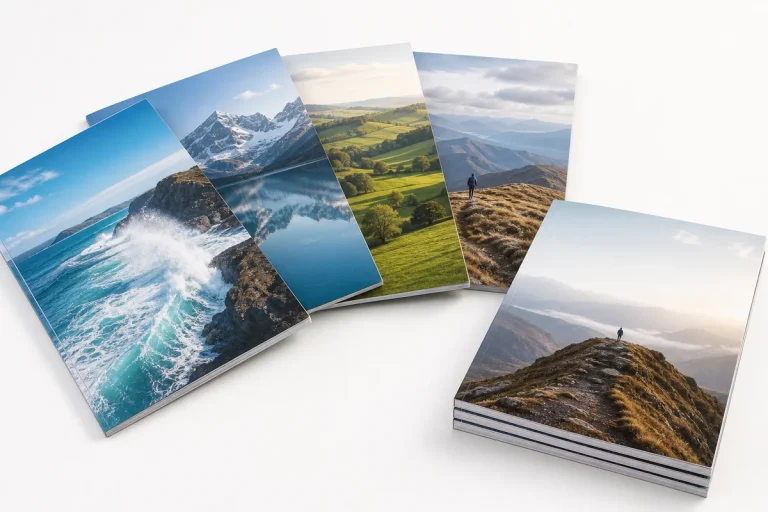
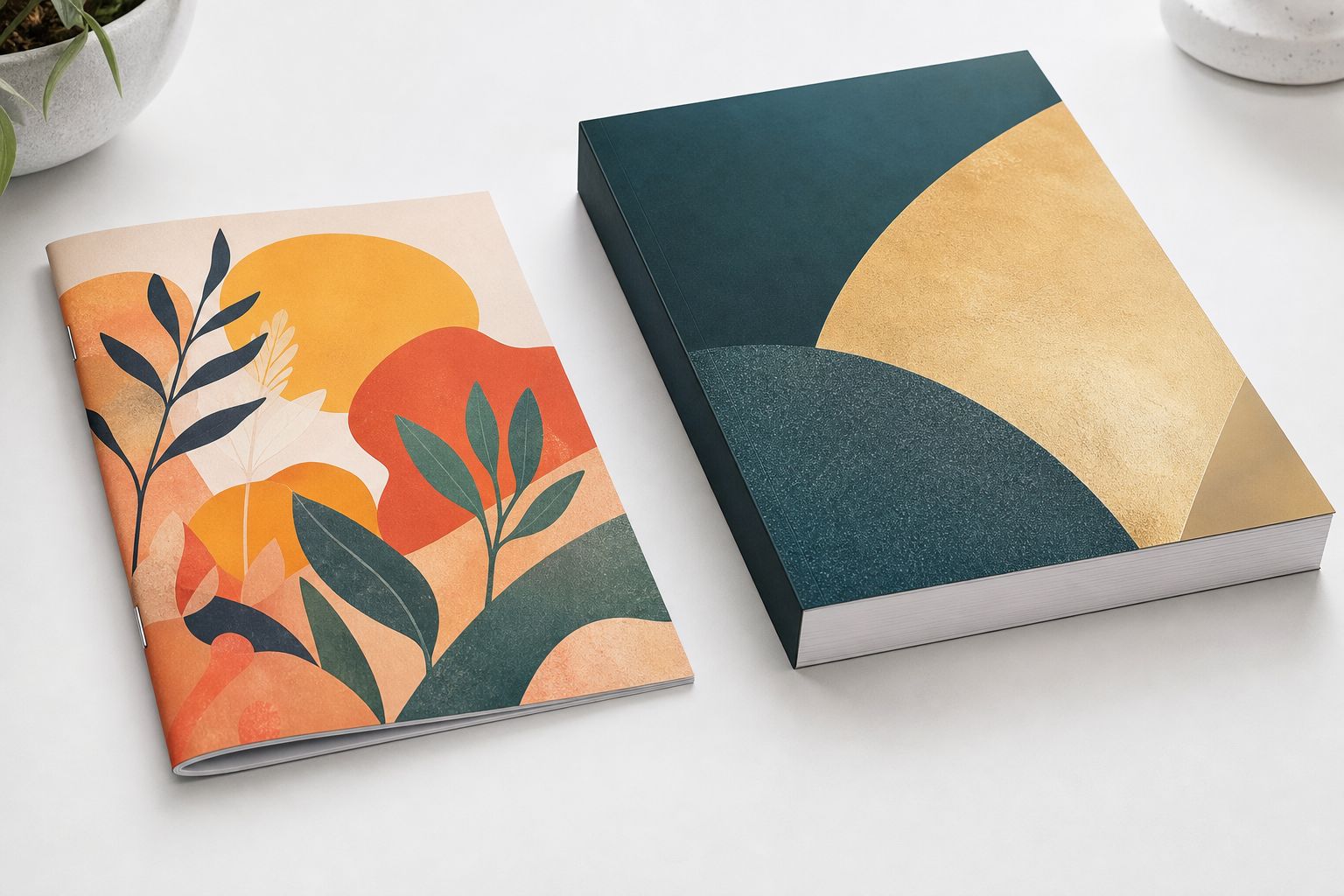
The saddle stitch vs perfect binding decision is a page-count decision first. Saddle stitch nests folded sheets and staples them through the fold, so the piece stays thin and opens freely. Perfect binding glues a block of leaves into a flat spine with a wrap-around cover, which needs enough pages to create a spine worth gluing.
| Binding | How it is made | Typical page range | Best used for |
|---|---|---|---|
| Saddle stitch | Folded sheets nested inside one another and stapled through the spine | About 8-64 pages, depending on paper weight | Thin booklets, catalogs, programs, workbooks with few pages |
| Perfect binding | Folded signatures or leaves glued into a square spine with a wrap-around cover | About 64-400 pages | Thicker books, manuals, directories, substantial catalogs |
Both are decided on paper, not in a spreadsheet: the page range shifts with the stock you choose, and a printer can only confirm the limit against your actual specification.
What is the maximum page count for saddle stitch?
The maximum page count saddle stitch work can carry is usually around 64 pages, and it falls as paper gets heavier. Folded sheets add thickness at the spine, and the inner pages of each sheet push outward, so a limit that is comfortable on 80 gsm text paper can be impossible on 170 gsm stock.
How does paper weight change the limit?
Paper weight changes the limit because spine bulk and creep both grow with every extra gram: heavier sheets fold thicker, so fewer of them fit inside one fold. A printer checks your stock, page count and trim size together before confirming that saddle stitch will close cleanly.
| Stock | Practical saddle stitch ceiling | What changes at the limit |
|---|---|---|
| 80-100 gsm text paper | Up to about 64 pages | Creep grows but the spine still closes flat |
| 130-170 gsm | Roughly 40-48 pages | Noticeable creep and outward push at the fore edge |
| 200 gsm and above | Often 24-32 pages | Spine bulk and cracking risk rise sharply |
These ranges are the industry’s rule of thumb rather than a fixed law – grain direction, trim size and finishing all move them, so the only reliable answer comes from your own paper and page plan.
When does a book need perfect binding?
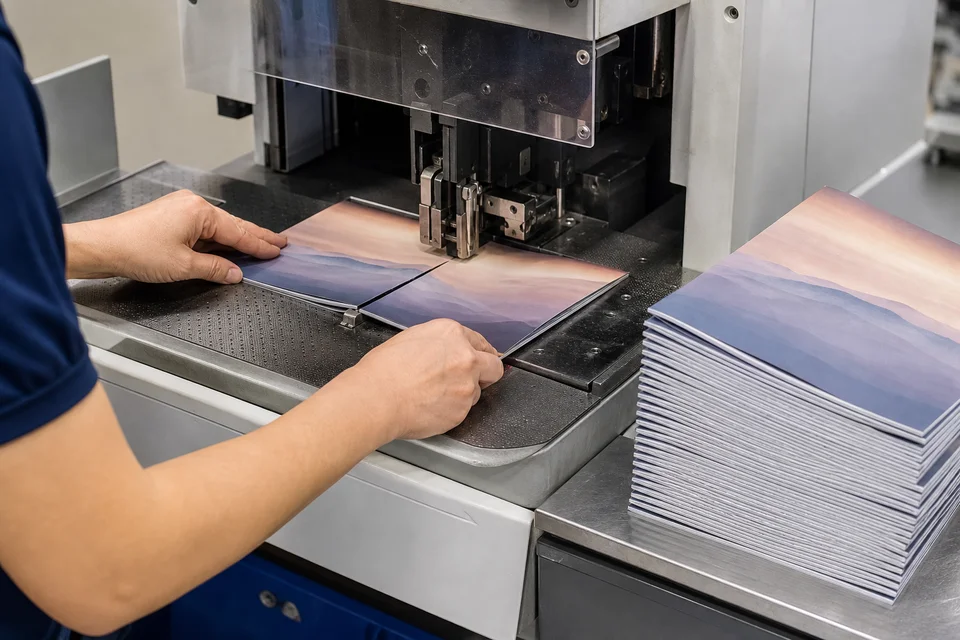
A book needs perfect binding once there are enough pages to build a spine: roughly 64 pages and above, which usually means a spine of about 3-6 mm on standard text paper. Below that the spine is too narrow to glue and wrap reliably, which is why thin book binding sits in the saddle stitch range instead.
Is sewn binding more durable than perfect binding?
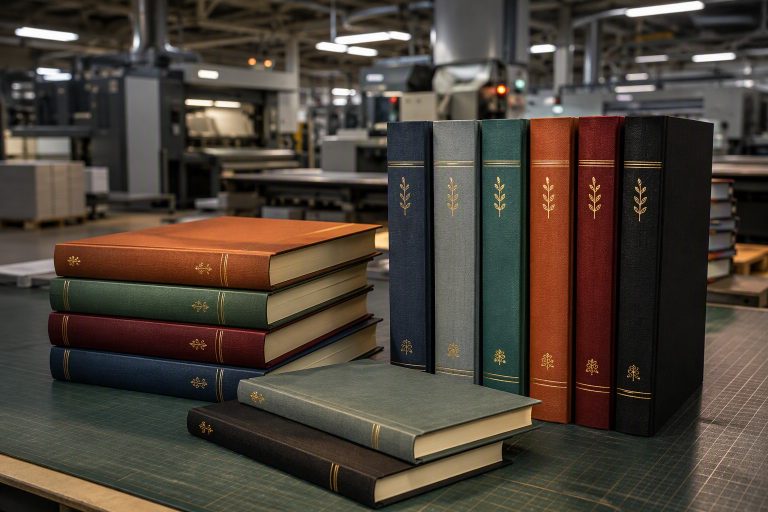
Sewn binding is more durable than plain perfect binding wherever a book is opened repeatedly. Sewing groups the sections with thread before the spine is glued, so the leaves are held by thread as well as adhesive; a glued-only block relies on the adhesive and the paper edge alone.
For catalog-style work the same logic holds: a thin catalog stays on saddle stitch, while a substantial one needs a glued spine and often the extra security of sewn sections. How those stages sit inside a full production sequence is set out in our custom book printing guide.
Which binding lasts longer?
Sewn sections inside a glued spine last longest for books that are opened often, because thread and adhesive share the load. Plain perfect binding holds up well in normal reading and reference use, while saddle stitch suits pieces that are handled briefly, such as programs and thin catalogs.
| Construction | Opening life | Typical use | What to watch |
|---|---|---|---|
| Saddle stitch | Good for short-life, high-turnover pieces | Booklets, programs, thin catalogs | Creep and spine wear after heavy repeated use |
| Perfect binding (glued) | Solid for normal reading and reference | Novels, manuals, thicker catalogs | Stiff opening at first; spine stress if abused |
| Perfect binding with sewn sections | Strongest of the glued formats | Books opened daily, premium titles | Higher production step count and planning lead time |
| Case bound | Built for long life and heavy handling | Keepsakes, gift editions, reference volumes | Longest production stage of the three methods |
How does binding choice change production lead time?
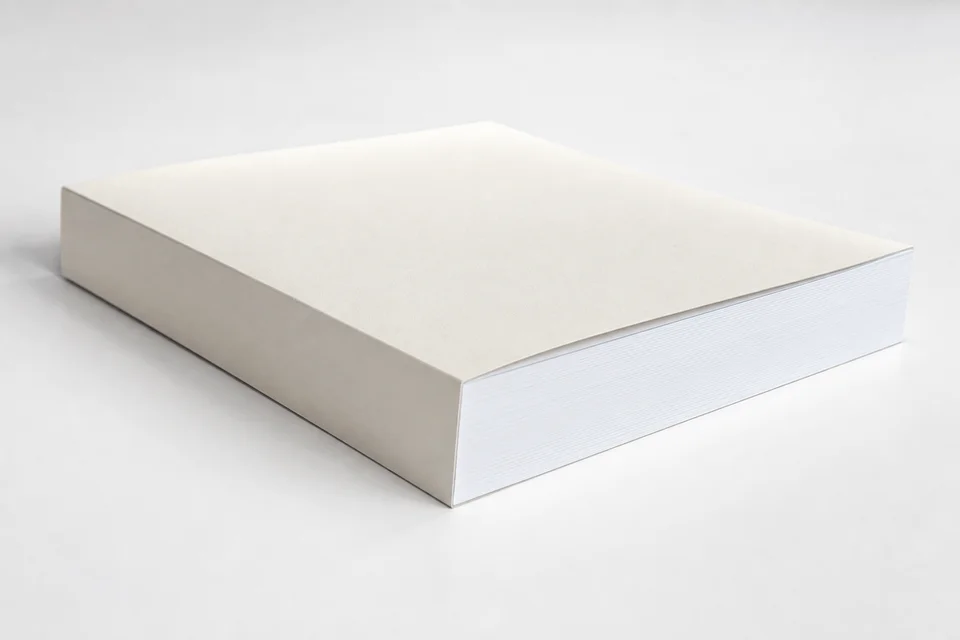
Binding choice changes production time because each method adds a different number of steps: saddle stitch runs 5-7 days in production, perfect binding 8-10 days and case binding 12-15 days, with runs above 5,000 copies adding 5-7 days. Sampling adds 1-2 days for a paperback and 2-3 days for hardcover.
| Stage | Saddle stitch | Perfect binding | Case bound |
|---|---|---|---|
| Pre-press file handling | 1-2 days on print-ready files | ||
| Sampling | 1-2 days | 1-2 days | 2-3 days |
| Production | 5-7 days | 8-10 days | 12-15 days |
| Volume effect | Above 5,000 copies, add 5-7 days | ||
| Freight | 5-7 days by air, up to a month by sea to nearby regions | ||
Most binding comparisons stop at page counts and stop short of the schedule. The difference is real: a glued spine adds binding, drying and trimming stages that a stapled fold does not, and that is why a 32-page booklet can ship in 5-7 days while the same title rebuilt as a glued book moves to 8-10 days.
Where a tooling or special-process plate fee applies to the cover, and the production run keeps the same artwork, that portion of the proof fee is refunded once the run reaches 1,000 copies or more.
A schedule view of the same stages, including what each day of the timeline belongs to, sits in our how long does book printing take article.
What other booklet binding options are there?
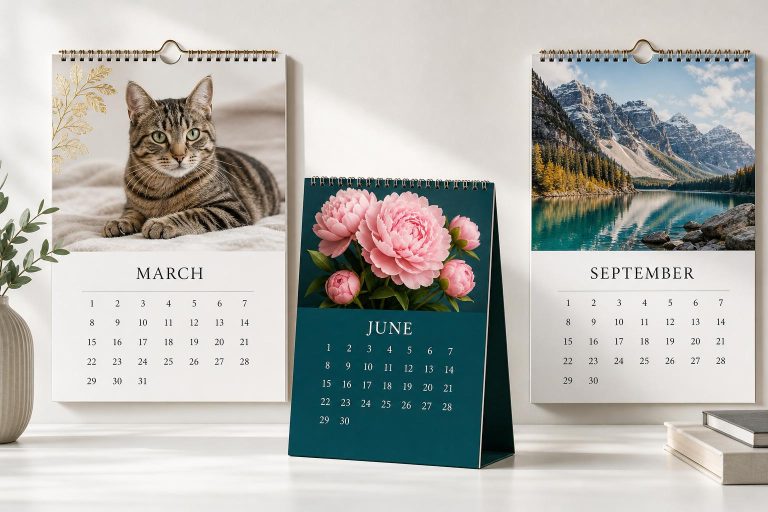
The booklet binding options worth quoting are saddle stitch, perfect binding, wire-o, spiral, sewn sections and case binding. The wire o binding vs saddle stitch decision usually turns on opening behaviour: wire-o opens completely flat for workbooks, planners and manuals, while saddle stitch keeps the traditional folded-booklet form.
- Wire-o: A wire comb threads through punched holes, so the piece opens flat and stays open – ideal for workbooks and planners.
- Spiral: A plastic or wire coil gives the same flat opening with a softer edge, common for notebooks and manuals.
- Sewn sections: Thread-sewn signatures add durability and are used inside glued or case-bound books.
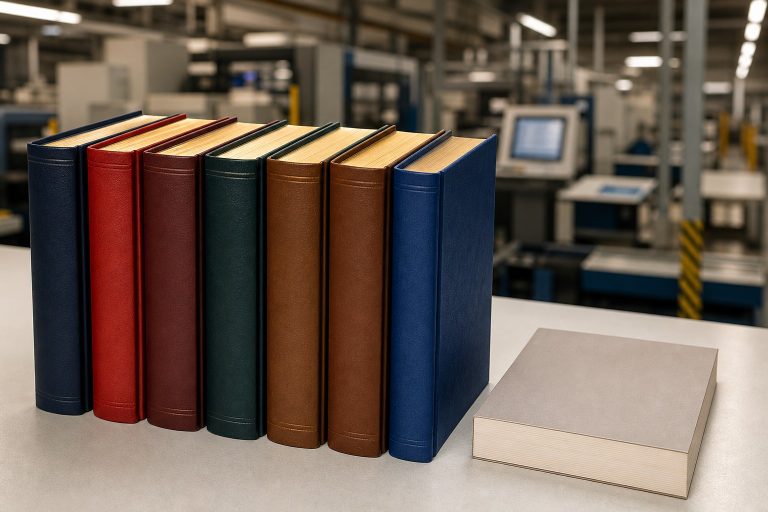
- Case binding: A rigid board case with a sewn block, finished with a rounded back, a square back or a softcover wrap depending on the look.
- Catalog binding types in practice: Thin catalogs stay on saddle stitch, substantial ones move to perfect binding, and price lists that must lie flat take wire-o.
Send your specs and get a custom quote.
Which binding should you choose?
Match the binding to page count, paper weight and how the piece will be used, then confirm the choice on a physical sample before files are finalised. The checklist below covers the decisions that matter most in custom book and booklet work.
- Up to about 48 pages: Saddle stitch, unless the paper is heavy enough to force a lower ceiling.
- 48-64 pages: Either method works; choose saddle stitch for light stock and perfect binding when the spine needs printed text.
- Over 64 pages: Perfect binding, with sewn sections added where the book is opened daily.
- Must open flat: Wire-o or spiral, regardless of page count.
- Premium and heavy handling: Case binding with a sewn block.
- Always confirm on paper: Ask for a sample in your final stock, because the limit moves with grain direction, trim size and finishing.
FAQ: Binding Choice Questions
Q1: What is the difference between saddle stitch and perfect binding?
A: Saddle stitch folds and staples sheets through the spine and suits thin pieces; perfect binding glues leaves into a square spine for thicker books. That construction difference is why saddle stitch vs perfect binding is decided by page count and paper weight first.
Q2: What is the maximum page count for saddle stitch?
A: Usually about 64 pages on standard text paper, and lower as the stock gets heavier. Heavy covers and thick text stock reach roughly 24-48 pages before spine bulk and creep become a problem.
Q3: How many pages do you need for perfect binding?
A: Roughly 64 pages and above, which gives a spine of about 3-6 mm on standard paper. Thinner pieces cannot form a spine that glues and wraps reliably, so they stay on saddle stitch.
Q4: Which binding lasts longer?
A: Sewn sections held in a glued spine last longest for frequently opened books. Plain perfect binding is solid for normal reading and reference use, while saddle stitch suits pieces handled briefly, like programs.
Q5: Does binding choice affect production time?
A: Yes. Saddle stitch runs 5-7 days in production, perfect binding 8-10 days and case binding 12-15 days, with runs above 5,000 copies adding 5-7 days before freight is planned.
Q6: Can the binding be changed after the sample is approved?
A: No, not without new work. Switching binding changes the spine width, cover layout and folding, so new files and a new sample are required before production can start.
Q7: Which binding is best for a thin book or booklet?
A: Saddle stitch suits most thin pieces up to about 64 pages, and wire-o is the better answer when a thin workbook or planner must open flat and stay open.
Written by the Longyin Printing team – book printing specialists for publishers worldwide.
Send your specs and get a custom quote.